| Availability: | |
|---|---|
| Quantity: | |
BOAO
Robot Laser Cladding Machine
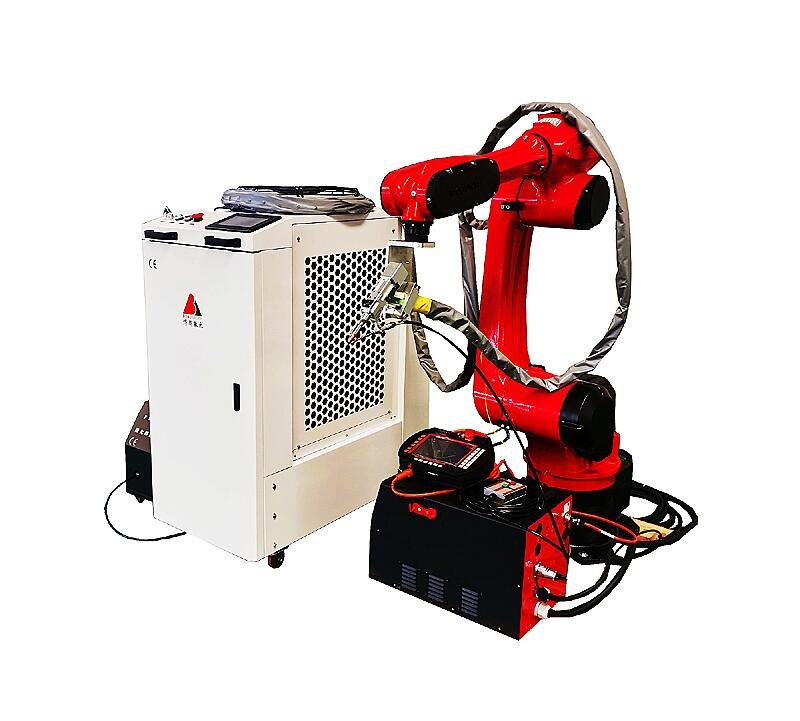
The robotic laser cladding machine equips traditional laser cladding technology with flexible "arms" and a "brain." It combines high-energy laser cladding with industrial robotics to form an intelligent processing system that can automatically and precisely "coat" the surface of various metal parts with a "super armor." This "armor" significantly improves the parts' wear resistance, corrosion resistance, and high-temperature resistance, and can also accurately repair damaged parts.
System composition
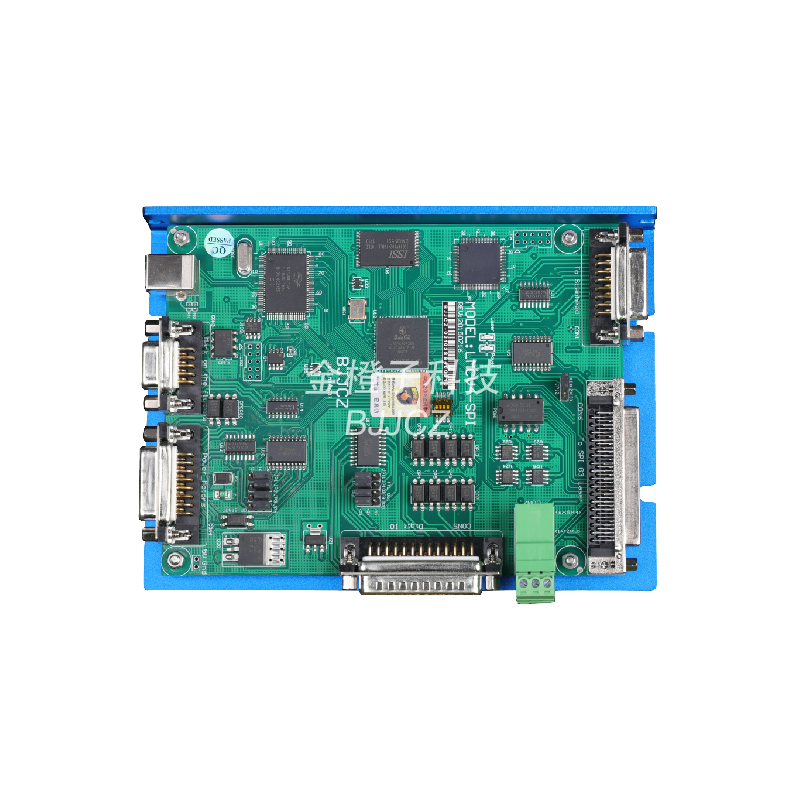
| Motion and Control Module | Industrial robots, control systems, positioners/guide rails | The system's "brain" and "limbs." The robot (usually 6-axis) is responsible for holding the cladding head and moving it precisely along a preset path; the positioner or guide rail can expand the machining degrees of freedom, enabling flexible machining of complex curved surfaces and large workpieces. |
| Laser generation module | Fiber laser | The system's "heart" provides a high-energy-density laser beam as a heat source. The power range is wide, commonly ranging from 2kW to 12kW, or even higher, to adapt to different process requirements. |
| Powder feeding module | High-precision powder feeder | The system's "blood supply system" is responsible for stably and accurately delivering metal powder to the cladding head. Commonly used are dual-barrel pneumatic or servo-driven powder feeders, ensuring uniform powder delivery and enabling powder addition without stopping the machine. |
| cladding processing module | Laser cladding head | The system's "gun head" is where the laser and powder are finally output. The high-performance cladding head has multiple protective lenses to prevent dust contamination and can be equipped with various powder feeding nozzles (such as annular, three-way, and four-way) to adapt to different processes. |
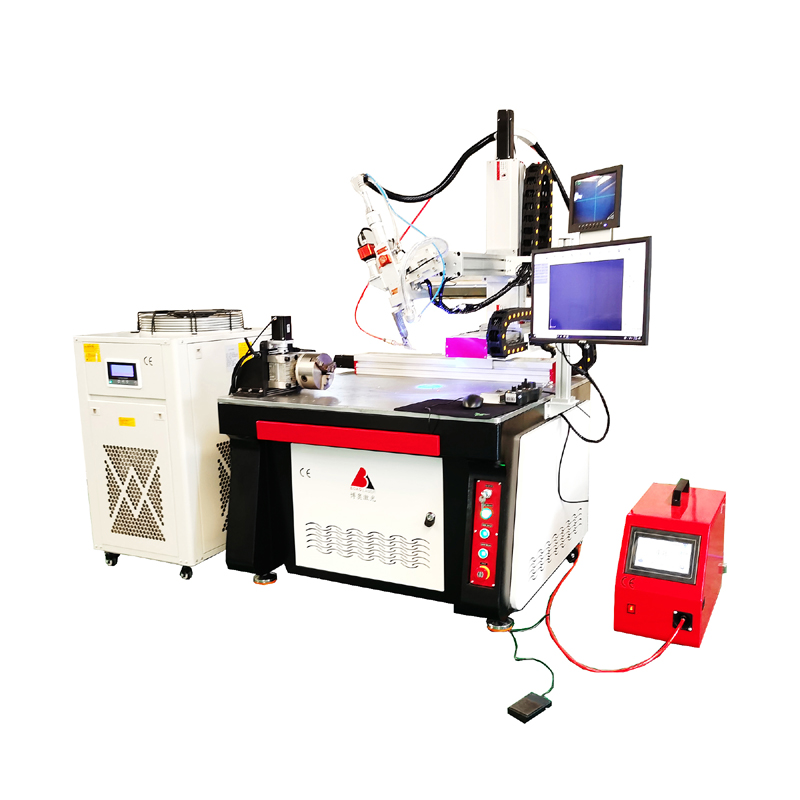
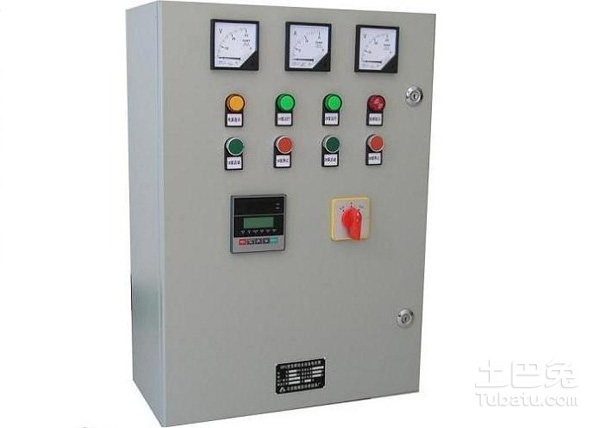
| Auxiliary guarantee module | chillers, voltage stabilizers, etc. | The system's "logistics team" consists of a chiller that continuously cools the laser and cladding head, ensuring 24-hour continuous operation, and a regulated power supply that ensures the stability and safety of the equipment. |
Core advantages
More Flexible Processing: The multi-axis linkage capability of robots allows them to easily handle irregularly shaped workpieces such as flat surfaces, curved surfaces, shafts, and even complex impeller blades, a feat unmatched by traditional machine tools.
Superior Quality: Laser cladding is an advanced surface technology. The cladding layer and substrate are metallurgically bonded, resulting in a strong bond, dense structure, and low dilution rate (typically controllable to within 5%). The precise control of the robot further ensures consistent processing consistency and repeatability (up to ±0.05mm or even higher).
Superior Efficiency: Robots can work tirelessly and continuously, far exceeding the efficiency of manual labor. Simultaneously, their small heat-affected zone and minimal workpiece deformation also improve yield.
Greener and More Environmentally Friendly: The entire processing is pollution-free and radiation-free, aligning with modern green manufacturing principles.
Robotic laser cladding machines are advanced manufacturing equipment integrating technologies from multiple disciplines, including lasers, robotics, materials, and control. They are not only a key means of component repair and performance enhancement in high-end manufacturing, but also an important tool for achieving green remanufacturing and promoting a circular economy. With technological advancements, their role in future intelligent manufacturing will become increasingly crucial.
Robot Laser Cladding Machine
The robotic laser cladding machine equips traditional laser cladding technology with flexible "arms" and a "brain." It combines high-energy laser cladding with industrial robotics to form an intelligent processing system that can automatically and precisely "coat" the surface of various metal parts with a "super armor." This "armor" significantly improves the parts' wear resistance, corrosion resistance, and high-temperature resistance, and can also accurately repair damaged parts.
System composition
| Motion and Control Module | Industrial robots, control systems, positioners/guide rails | The system's "brain" and "limbs." The robot (usually 6-axis) is responsible for holding the cladding head and moving it precisely along a preset path; the positioner or guide rail can expand the machining degrees of freedom, enabling flexible machining of complex curved surfaces and large workpieces. |
| Laser generation module | Fiber laser | The system's "heart" provides a high-energy-density laser beam as a heat source. The power range is wide, commonly ranging from 2kW to 12kW, or even higher, to adapt to different process requirements. |
| Powder feeding module | High-precision powder feeder | The system's "blood supply system" is responsible for stably and accurately delivering metal powder to the cladding head. Commonly used are dual-barrel pneumatic or servo-driven powder feeders, ensuring uniform powder delivery and enabling powder addition without stopping the machine. |
| cladding processing module | Laser cladding head | The system's "gun head" is where the laser and powder are finally output. The high-performance cladding head has multiple protective lenses to prevent dust contamination and can be equipped with various powder feeding nozzles (such as annular, three-way, and four-way) to adapt to different processes. |
| Auxiliary guarantee module | chillers, voltage stabilizers, etc. | The system's "logistics team" consists of a chiller that continuously cools the laser and cladding head, ensuring 24-hour continuous operation, and a regulated power supply that ensures the stability and safety of the equipment. |
Core advantages
More Flexible Processing: The multi-axis linkage capability of robots allows them to easily handle irregularly shaped workpieces such as flat surfaces, curved surfaces, shafts, and even complex impeller blades, a feat unmatched by traditional machine tools.
Superior Quality: Laser cladding is an advanced surface technology. The cladding layer and substrate are metallurgically bonded, resulting in a strong bond, dense structure, and low dilution rate (typically controllable to within 5%). The precise control of the robot further ensures consistent processing consistency and repeatability (up to ±0.05mm or even higher).
Superior Efficiency: Robots can work tirelessly and continuously, far exceeding the efficiency of manual labor. Simultaneously, their small heat-affected zone and minimal workpiece deformation also improve yield.
Greener and More Environmentally Friendly: The entire processing is pollution-free and radiation-free, aligning with modern green manufacturing principles.
Robotic laser cladding machines are advanced manufacturing equipment integrating technologies from multiple disciplines, including lasers, robotics, materials, and control. They are not only a key means of component repair and performance enhancement in high-end manufacturing, but also an important tool for achieving green remanufacturing and promoting a circular economy. With technological advancements, their role in future intelligent manufacturing will become increasingly crucial.
Technical Parameters
Model | BFW |
Laser Type | CW FIBER LASER |
Laser Wavelength | 1060nm |
Laser Maximum Power | 2000w/3000w/6000w/12000w |
Welding Spot | 1.2mm-4.0mm |
Output Powder | 10~150g/min |
Total Power Consumption | 8kw /10KW /12KW /14KW |
Cooling System | Water Cooling |
working time | 24 Hours |
Environment temperature | 0-35°C |
Power requirements | 380V/3 Phases /50Hz or 60Hz |
Technical Parameters
Model | BFW |
Laser Type | CW FIBER LASER |
Laser Wavelength | 1060nm |
Laser Maximum Power | 2000w/3000w/6000w/12000w |
Welding Spot | 1.2mm-4.0mm |
Output Powder | 10~150g/min |
Total Power Consumption | 8kw /10KW /12KW /14KW |
Cooling System | Water Cooling |
working time | 24 Hours |
Environment temperature | 0-35°C |
Power requirements | 380V/3 Phases /50Hz or 60Hz |
Product Application
1. Aerospace & Military Industry: Widely used in titanium alloy, nickel-based super alloy, precipitation hardening stainless steel and other materials of aviation components, such as engine blades, leaf crowns, brakes and other welding repair.
2. Casting Industry: Can be used for cast iron surface cladding alloy, casting defect repair, low thermal effect, metallurgical combination, suitable for ductile iron, gray iron defect repair.
3. Mold Industry: Solve the problem that the large mold can not work on the table, and the fixed laser can not be repaired on the site.
4. Screw Product: It is used for abrasion resistance surfacing welding of screw edge and repair welding of damage caused by later use.
5. Machinery Industry:Engine parts repair (engine housing, crankshaft), gearbox parts repair (shaft, tooth), air compressor parts hydraulic rod parts repair (cylinder liner, hydraulic rod), construction machinery, mining machinery parts repair.

Product Application
1. Aerospace & Military Industry: Widely used in titanium alloy, nickel-based super alloy, precipitation hardening stainless steel and other materials of aviation components, such as engine blades, leaf crowns, brakes and other welding repair.
2. Casting Industry: Can be used for cast iron surface cladding alloy, casting defect repair, low thermal effect, metallurgical combination, suitable for ductile iron, gray iron defect repair.
3. Mold Industry: Solve the problem that the large mold can not work on the table, and the fixed laser can not be repaired on the site.
4. Screw Product: It is used for abrasion resistance surfacing welding of screw edge and repair welding of damage caused by later use.
5. Machinery Industry:Engine parts repair (engine housing, crankshaft), gearbox parts repair (shaft, tooth), air compressor parts hydraulic rod parts repair (cylinder liner, hydraulic rod), construction machinery, mining machinery parts repair.

content is empty!